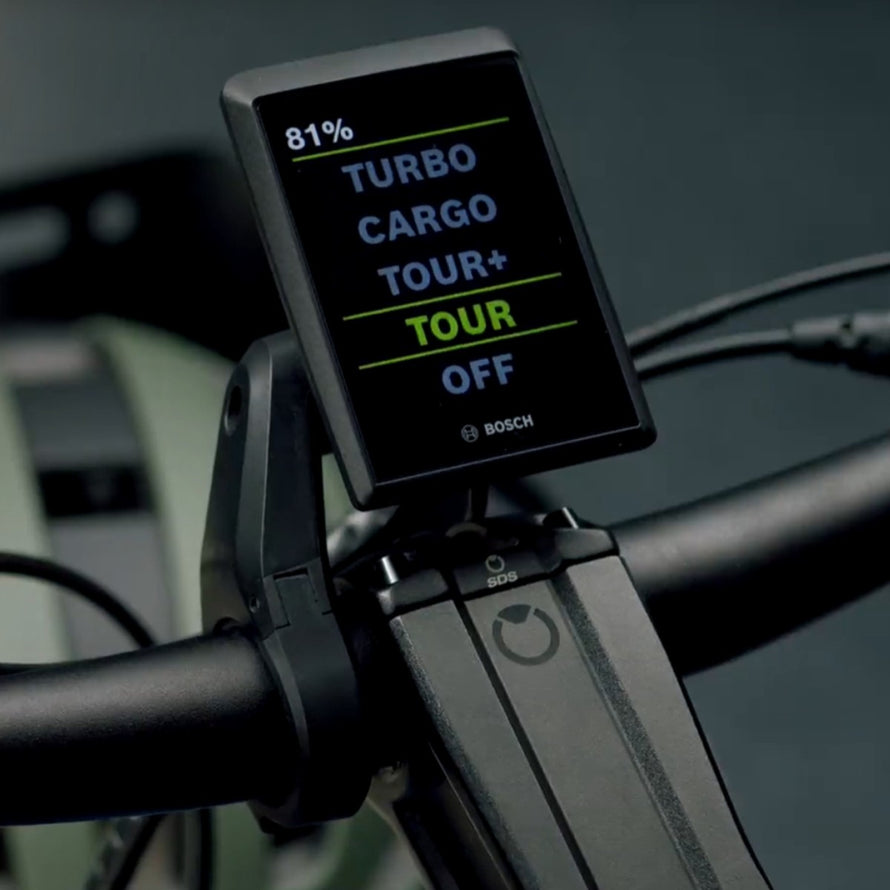
bosch e bike display kiox 500 Bosch Kiox 500 – Vernetztes Display für E‑Bikes mit Smart System
SKU: 49126183796
bosch e bike display kiox 500

bosch e bike display kiox 500 Bosch Kiox 500 – Vernetztes Display für E‑Bikes mit Smart System

Sale price$22.27 Regular price$24.74
Save 10%

Pay in installments of $6.18 with ShopPay, AfterPay and Klarna

Shipping Estimate
USA
  • USA
  • CAN

Ships within 48 hours · Estimated delivery Jul 2 - Jul 7

Promo Codes Available:

For Your Every Summer RSVP, with Code: SUMMER15

Description

bosch e bike display kiox 500 Bosch Kiox 500 – Vernetztes Display für E‑Bikes mit Smart SystemEin Blick auf den Lenker, um zu wissen, wo Sie stehen, eine angekndigte Kurve, bevor Sie sie gesehen haben, eine sorgenfrei verwaltete Reichweite: genau das bietet der Bosch Kiox 500, das vernetzte Display fr Pedelecs, konzipiert fr Radfahrende, die mit Vertrauen fahren wollen, sei es um zur Arbeit zu pendeln oder neue innerstdtische Strecken zu erkunden. Umfassende Personalisierung fr alle Radfahrenden Der Bosch Kiox 500 ist ausschlielich kompatibel

Ein Blick auf den Lenker, um zu wissen, wo Sie stehen, eine angekündigte Kurve, bevor Sie sie gesehen haben, eine sorgenfrei verwaltete Reichweite: genau das bietet der Bosch Kiox 500, das vernetzte Display für Pedelecs, konzipiert für Radfahrende, die mit Vertrauen fahren wollen, sei es um zur Arbeit zu pendeln oder neue innerstädtische Strecken zu erkunden.

Umfassende Personalisierung für alle Radfahrenden

Der Bosch Kiox 500 ist ausschließlich kompatibel mit Fahrrädern, die mit dem Smart System Bosch ausgestattet sind. Mit mehr als 30 Konfigurationsmöglichkeiten wählen Sie genau aus, welche Daten während Ihrer Fahrten angezeigt werden: Geschwindigkeit, Zeit, Kilometerstand, Höhenprofil, Nutzung der Unterstützungsstufen. Die Anzeige des Höhenprofils ermöglicht es, anstehende Steigungen auf der aktuellen Route zu antizipieren, was hilft, die Anstrengung zu dosieren und die Unterstützungsstufe anzupassen, bevor Sie eine Steigung angehen. Ihre Aktivitäten werden automatisch aufgezeichnet und können nach der Tour mit Plattformen wie Strava oder komoot geteilt werden.

Eine Navigation, die Sie führt, ohne abzulenken

Dank der integrierten Navigation planen Sie Ihre Route in der eBike Flow App auf Ihrem Telefon, und die Anzeige übernimmt automatisch die Führung, indem sie Ihnen jede Abzweigung nacheinander anzeigt. Der Kiox 500 begleitet Sie außerdem über akustische Signale mit einstellbarer Lautstärke, sodass Sie keine Abbiegung verpassen müssen, ohne den Blick senken zu müssen. Die Funktion Range Control hilft Ihnen, die verbleibende Reichweite zu verwalten, indem Sie den gewünschten Ladezustand bei Ankunft wählen können. Während Ihrer Fahrt passt die Funktion des dynamischen Displays die sichtbaren Informationen automatisch der Situation an, ohne dass Sie manuell zwischen den verschiedenen verfügbaren Ansichten wechseln müssen.

Ein kompaktes, robustes und stets gut lesbares Display

Der Kiox 500 hat eine Bildschirmdiagonale von 2,8 Zoll (ca. 7 Zentimeter) mit einer Auflösung von 240 x 320 Pixeln, was klare Farben und einen angenehmen Kontrast garantiert, unabhängig von der Sonnenausrichtung. Die Helligkeitseinstellung passt sich Ihren Vorlieben an, für eine komfortable Lesbarkeit unter allen Bedingungen. Er verfügt über eine IP55-Schutzklasse, das heißt, er ist spritzwasser- und staubresistent. Ob Sie bei leichtem Regen fahren oder auf einem etwas staubigen Weg unterwegs sind, die Anzeige bleibt voll funktionsfähig. Der Kiox 500 wird direkt von der Batterie des E-Bikes mit Strom versorgt: keine Batterie, kein externes Ladegerät erforderlich.

Intuitive Bedienung und Montage

Alle Interaktionen erfolgen über die am Lenker befestigte Fernbedienung, entweder die LED Remote oder die Mini Remote, die in Verbindung mit dem System Controller oder dem Purion 200 verwendet wird. Die Montage erfolgt über eine modulare Displayhalterung, die separat verkauft wird.

Verriegelungsfunktion und Schiebehilfe

Der Kiox 500 lässt sich in wenigen Sekunden ohne Werkzeug aus seiner Halterung entnehmen. Dieses abnehmbare Design ermöglicht es, Ihr E-Bike zu verriegeln, indem das Display über die eBike Lock-Funktion als Schlüssel verwendet wird. Zum Weiterfahren muss es nur wieder eingesetzt werden.

Das Display enthält außerdem eine Schiebehilfe, die besonders praktisch ist, wenn Sie das Fahrrad in der Stadt oder bergauf schieben müssen. Wenn Sie die Minus-Taste gedrückt halten, starten Sie auch auf unebenem Untergrund mühelos, wobei die Hill Hold-Funktion automatisch aktiviert wird, um ein unbeabsichtigtes Zurückrollen des Fahrrads zu verhindern.

Regelmäßige Updates für eine Ausstattung, die mit Ihnen wächst

Der Kiox 500 aktualisiert sich per Bluetooth über die eBike Flow App. Neue Funktionen können so direkt heruntergeladen und installiert werden, ohne dass ein Händlerbesuch erforderlich ist. Die Ausstattung verbessert sich damit im Laufe der Zeit im Zuge der Weiterentwicklungen des Smart System Bosch.

Kiox 500 oder Kiox 300: welchen wählen ?

Obwohl beide Modelle auf derselben technischen Basis und mit den gleichen grundlegenden Funktionen ausgestattet sind, zeichnet sich der Kiox 500 durch eine deutlich größere Anzeigefläche (2,8 Zoll gegenüber 2,0 Zoll) und durch akustische Navigationshinweise aus, die beim Kiox 300 nicht vorhanden sind. Für Radfahrende, die ihre Daten auf einen Blick ohne Aufwand ablesen und sich akustisch durch die Straßen leiten lassen möchten, ist der Kiox 500 die umfassendere Wahl.

Um Ihr Kiox 500-Display an Ihrem Fahrrad zu befestigen, denken Sie an das Bosch Nachrüst-Kit, das für eine sichere und stabile Montage am Lenker unerlässlich ist.

Shipping Notes
  • Free Standard Shipping on $100+ Orders to the USA.
  • Except Preorder products are shipped in 48 hours.
  • Delivery to the USA:
  1. Standard Shipping : 3-10 business days
  • If time is of the essence, please consider selecting expedited delivery for faster service.
Exchange/Return Notes
  • We offer a 30-day return/exchange service after receiving.
  • Final sale items are not eligible for returns or exchanges.
  • To process your return/exchange, please contact us at [email protected]
  • Please click here for more details>>> Return & Exchange Policy
SKU: 49126183796

Discover Niche Categories That Outsell bosch e bike display kiox 500

Top-Converting Item to Boost Your Average Order

4.1 ★★★★★
Based on 199 reviews
Sort
Highest Rating
Newest First
Oldest First
Product Reviews
D
Verified Purchase
David Escobar
Lake Worth, US
★★★★★ 5
Good starting point. But can't find the code.
Format: Kindle
Reading chapter 3. It was so far so good, but can't find the code in the repo. "All the related code can be found in the repository under project/hooks-notification." And in the repo I see no project folder. Please help!
WAS THIS REVIEW HELPFUL?YesReportShare
Reviewed in the United States on April 3, 2026
W
Verified Purchase
WU.
Cuba, US
★★★★★ 4
Good overview of the leading Agentic Framework. Will become outdated quickly.
Format: Paperback
3.5 Stars rounded up. Not a bad place to start if you need to get up to speed fast with Claude Code, understand its vast feature set, how it works under the hood, best practices, and the various agent primitives and how to get the most out of them. Agentic frameworks (Claude Code in particular) are quickly becoming table stakes for anyone working in tech, so it's best to start now. I appreciated the author's ability to flesh out areas where Anthropic's documentation is lacking in depth and nuance, and for some not already working with Claude in their own repos, the fact that he provides "toy" repos where one can experiment with the tools without fear of consequence. Where the book falls short is that most of the stuff in here is already covered pretty well already in Anthropic's docs, or even better so in their free "Skilljar" courses. What's more, some areas are given a bit of a shallow treatment, while others are a bit better done. So it's a bit inconsistent in that sense. Also, I can see how this book will quickly lose its currency in a few months at the pace things are going. Ultimately, for me, the price of this book was a bit rich for my liking given the criticisms above. Still, I feel like I got valuable info that rounded up what I already knew from working with this agentic framework. Recommended.
WAS THIS REVIEW HELPFUL?YesReportShare
Reviewed in the United States on May 28, 2026
B
Brahmananda Reddy
Bozeman, US
★★★★★ 5
Practical AI Engineering Beyond Prompts — One of the Better Books on Agentic Coding
Format: Paperback
This book is not another “AI coding hype” book. A lot of books talk about agents at a very high level. This one actually explains how things work when you try to use them inside real development workflows. That was the biggest difference for me. What I liked most was the focus on context engineering, memory, MCP, hooks, subagents, and workflow orchestration instead of just “prompt better.” The author spends time explaining why long-running agent systems fail, how context grows over time, and why most AI coding setups become messy without structure. The examples also feel practical — The HookHub project, Next.js setup, GitHub workflows, Claude memory files, and MCP integrations make it easier to connect theory with actual implementation. From my retail domain experience perspective, I could immediately connect this to forecasting and pricing workflows. For example: * agents helping analysts generate specs before model development * automated code review for promo forecasting pipelines * isolated subagents for pricing, promotions, assortment * persistent memory for business rules across teams * MCP integrations to pull context from internal systems safely The section around context isolation and subagents especially stood out because that is very similar to how enterprise forecasting teams already operate in reality. Different teams own different decision spaces. One thing I appreciated: the author does not oversell AI. There is a strong focus on constraints, context pollution, hallucinations, performance degradation, and workflow reliability. That makes the book feel grounded instead of marketing-heavy. This is not for complete beginners though. If someone has never worked with Git, APIs, coding agents, or LLM workflows, parts of the book may feel overwhelming early on. The author clearly says this is not beginner-level content. Overall, probably one of the more practical books I have read recently on agentic coding systems. Good for: * software engineers * AI engineers * enterprise architecture teams * technical product teams * analytics leaders trying to operationalize AI development workflows Especially useful if your organization is trying to move from “AI demos” into actual production workflows.
WAS THIS REVIEW HELPFUL?YesReportShare
Reviewed in the United States on May 20, 2026
U
UA
Port Orchard, US
★★★★★ 5
A Good Reality Check on How AI Agents Actually Work in Enterprise Systems
Format: Paperback
Most AI books stop at prompts. This one goes deeper into how agent systems actually behave once you try to use them inside large workflows with memory, tools, permissions, automation, and multiple agents working together. That part felt very relevant for healthcare and enterprise environments. The book does a good job explaining why context engineering matters and how poor context handling creates hallucinations, inconsistent outputs, and degraded performance over time. Honestly, that is one of the biggest problems organizations underestimate right now. In healthcare workflows, context matters a lot: * prior interactions * business rules * auditability * escalation logic * safety constraints * tool permissions * workflow boundaries The sections on persistent memory, scoped context, subagents, and structured workflows connected strongly to that reality. I work in enterprise analytics, and while reading this book I kept thinking about use cases like: * pharmacy workflow automation * prior authorization support systems * coding assistants for healthcare engineering teams * AI copilots for operational analytics * agent-based escalation systems * claims and workflow orchestration The MCP chapters were also useful because they explain integration challenges clearly instead of treating tooling as magic. What made this book stand out for me was the balance between implementation and architecture. The author explains: * why long contexts fail * how context poisoning happens * why isolation matters * when parallel agents help * when they actually create more complexity That level of honesty is missing in many AI books right now. Another thing: the examples are not overly academic — The Next.js project setup, GitHub automation, Claude desktop workflows, memory systems, hooks, and subagents make the learning process feel practical and hands-on. One limitation: this book assumes technical background. Someone completely new to coding agents, LLMs, Git, or development workflows may struggle in the first few chapters. But for engineers, AI teams, enterprise architects, and technical leaders trying to understand where agentic coding is actually going, this book is worth reading. Especially for organizations trying to operationalize AI safely instead of just experimenting with chatbots.
WAS THIS REVIEW HELPFUL?YesReportShare
Reviewed in the United States on May 20, 2026
C
Christopher West
Louisville, US
★★★★★ 5
Great book! Practical and for developers that already use AI!
Format: Paperback
I purchased "Agentic Coding" by Claude Code due to my desire for an alternative to generic "Prompt Template" type resources related to AI-based development. This book accomplishes just that. As opposed to merely viewing Claude Code as a "magic box", the author has explained how to utilize it in conjunction with other actual development processes. The authors' emphasis on "context engineering" (i.e., structuring data/information; managing knowledge in a project; guiding an AI agent to produce consistent results vs. producing random/unknown results) represents the strongest component of the book. It should be noted that the book appears to be intended primarily for experienced developers with prior experience in software development and/or familiarity with AI-based development tools. Should you be familiar with Git, the command-line interface, and/or modern development processes, you may find this resource very helpful. Conversely, I did appreciate the fact that there were no novice-oriented descriptions provided throughout the book. The aspect of the book that I found most valuable, however, is the extremely pragmatic nature of the material contained within. The examples illustrated through developing/maintaining CLAUDE.md files; utilizing Claude Code in combination with GitHub Workflows; employing MCP Servers; and creating multi-agent or sub-agent workflows all seemed to reflect a clear focus on "real world usage" rather than theoretical constructs. In addition, each chapter builds upon previous chapters in such a manner as to provide a logical progression through which the reader can easily understand and ultimately implement the concepts learned. I also appreciated that the author included guidance on responsible utilization of the tool(s), as well as maintaining control over what changes are made by the agent. While numerous books regarding AI focus solely on what AI tools can accomplish, this book addresses both how to utilize these tools effectively in a real codebase, as well as responsibility and safety considerations. In summary, this is not a book for individuals completely inexperienced in either programming or generative AI. However, if you are currently experimenting with tools such as Claude, Cursor, GitHub Actions, or MCP, this is likely one of the more useful and practical books available on the subject. Recommended for software engineers seeking to transition from simply "prompting an AI" into establishing a repeatable/professional workflow process surrounding agentic coding.
WAS THIS REVIEW HELPFUL?YesReportShare
Reviewed in the United States on April 11, 2026

recommand products